
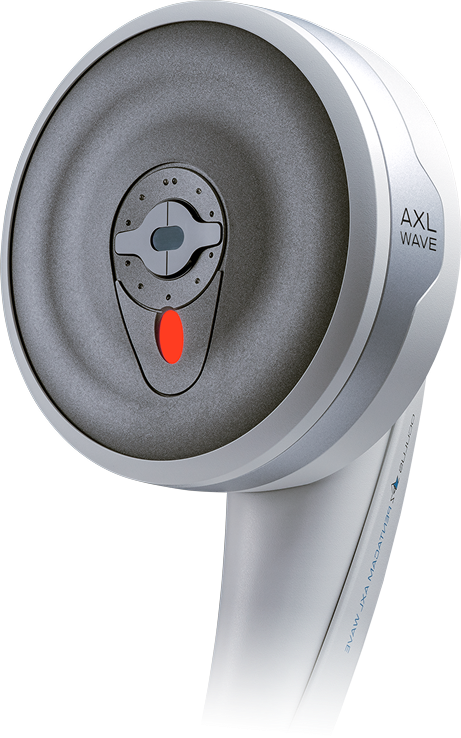
The Premium Workflow for IOL Planning
Four Steps to Precise Cataract Surgery with the Pentacam® AXL Wave
The Pentacam® AXL Wave combines tomography, biometry, wavefront analysis and refraction in a single workflow
‘A biometer measures key parameters used in IOL calculation.
The Pentacam® AXL Wave helps you tailor IOL selection.’
Fully understand the eye and plan the optimal IOL
The foundation for optimal IOL planning
Precise IOL planning begins with accurate measurement data.
The Full Sequence Overview (FSO) provides a structured view of all the eye’s key parameters by combining refraction and wavefront with the data from the established Cataract Pre-OP Display including axial length, corneal tomography, total astigmatism, anterior chamber depth.
Additionally, the display enables a comprehensive plausibility check of the measurement data and an immediate assessment of measurement quality, which in turn creates a reliable foundation for further planning.
The combination with the results of the Belin/Ambrósio Display (BAD) and Corneal Optical Densitometry Display help to identify the appropriate IOL types for the eye in question.
Finally, the Visual Performance Display provides a clear and concise summary of the visual quality that can be achieved with corrective lenses under current conditions – both during day and at night.
Everyday benefits for your clinic


Examine corneal anomalies effectively
Assessment of corneal condition and optical quality
The Belin/Ambrósio Display (BAD) analyses the cornea using tomographic data, including the anterior and posterior surfaces and pachymetry, and is considered the gold standard for ectasia screening. This means early shape changes can be identified before a toric or multifocal IOL has been selected.
In addition, Corneal Optical Densitometry (COD) enables the objective assessment of corneal transparency across different layers and zones. Optical opacities, like those associated with endothelial conditions such as Fuchs’ dystrophy, as well as corneal changes i.e. from a LASIK flap, can be identified.
Together, these displays enable comprehensive corneal assessment with a focus on stability and optical quality – and create a reliable foundation for selecting suitable IOLs.
Everyday benefits for your clinic
Calculate the IOL with accuracy
Precise calculation without manual data entry
The integrated IOL Calculator automatically imports all measurement data and uses modern formulas such as Barrett and Olsen to calculate the appropriate IOL – without the need for manual data entry.
It reliably accounts for even complex cases like toric IOLs, post-refractive corneas (LASIK, PRK, RK) and eyes that have undergone corneal surgery. Differences between both eyes are automatically identified and highlighted.
The IOL Calculator features a built-in IOL database that is constantly updated and expanded. The Barret RX formula is also available for postoperative management.
The results are documented and can be exported into existing practice and clinic systems. In addition, the individual IOL constants can be optimized.
Everyday benefits for your clinic



Assess surgical outcomes objectively
Lens assessment under realistic conditions
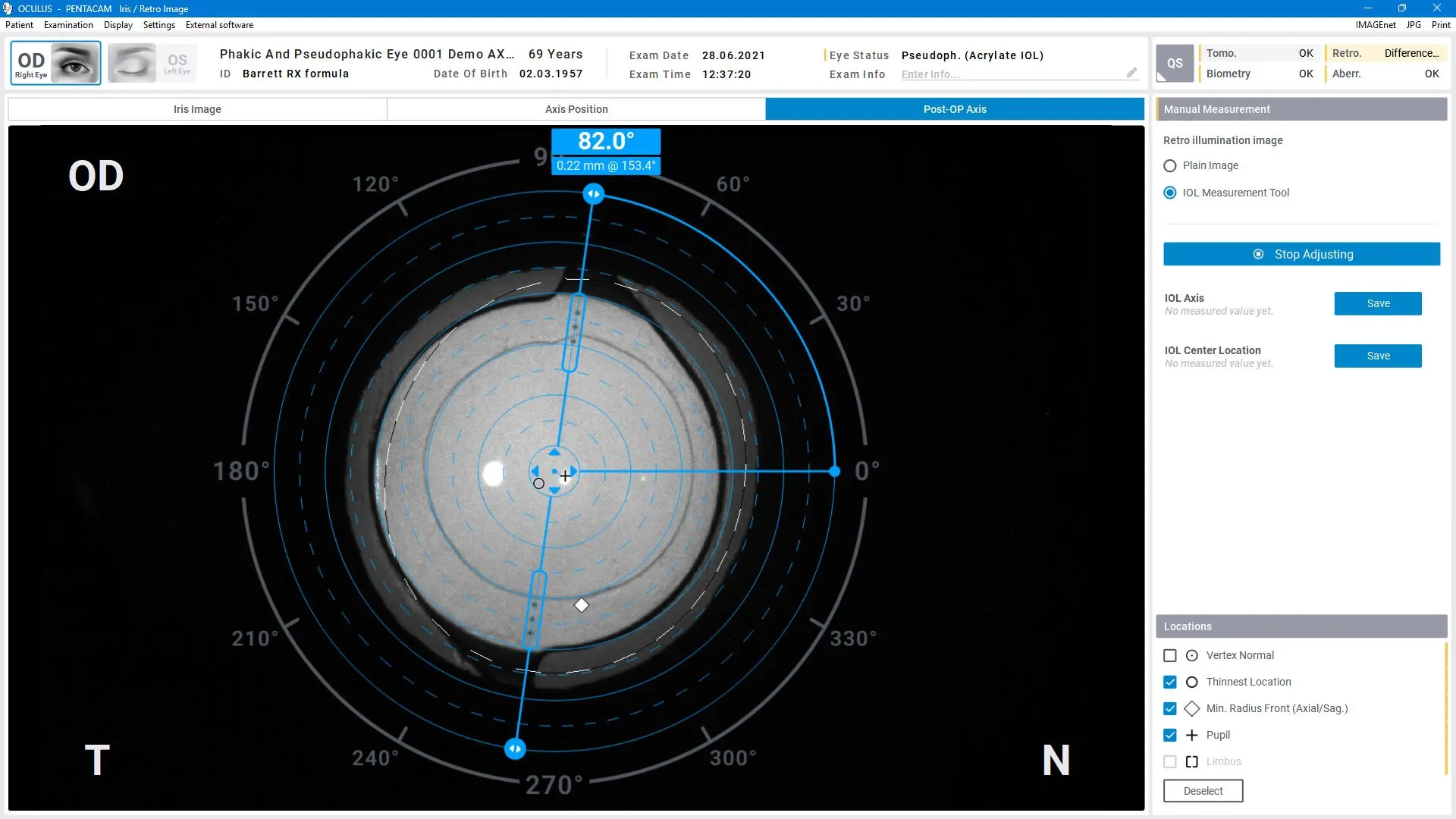
Integrated retroillumination allows for the postoperative assessment of the toric IOL position in a pseudophakic eye.
This makes it possible to verify whether the intraocular lens is in the planned axial position after implantation.
Everyday benefits for your clinic
FAQ
Contact us!
Request a quote or contact us if you need further information.
Request a quoteContact requestHotline
Questions?
Get in touch with us.
Tel. +49 641 2005-800

